Home / Sunday-mid-day / Article /
Here's how Twitter became the new COVID-19 helpline
Updated On: 25 April, 2021 07:10 AM IST | Mumbai | Jane Borges
Social media platform turns from trolling arena to life-saving resource stage with celebs, commoners and digital strategists jumping in to hold up crumbling health infra





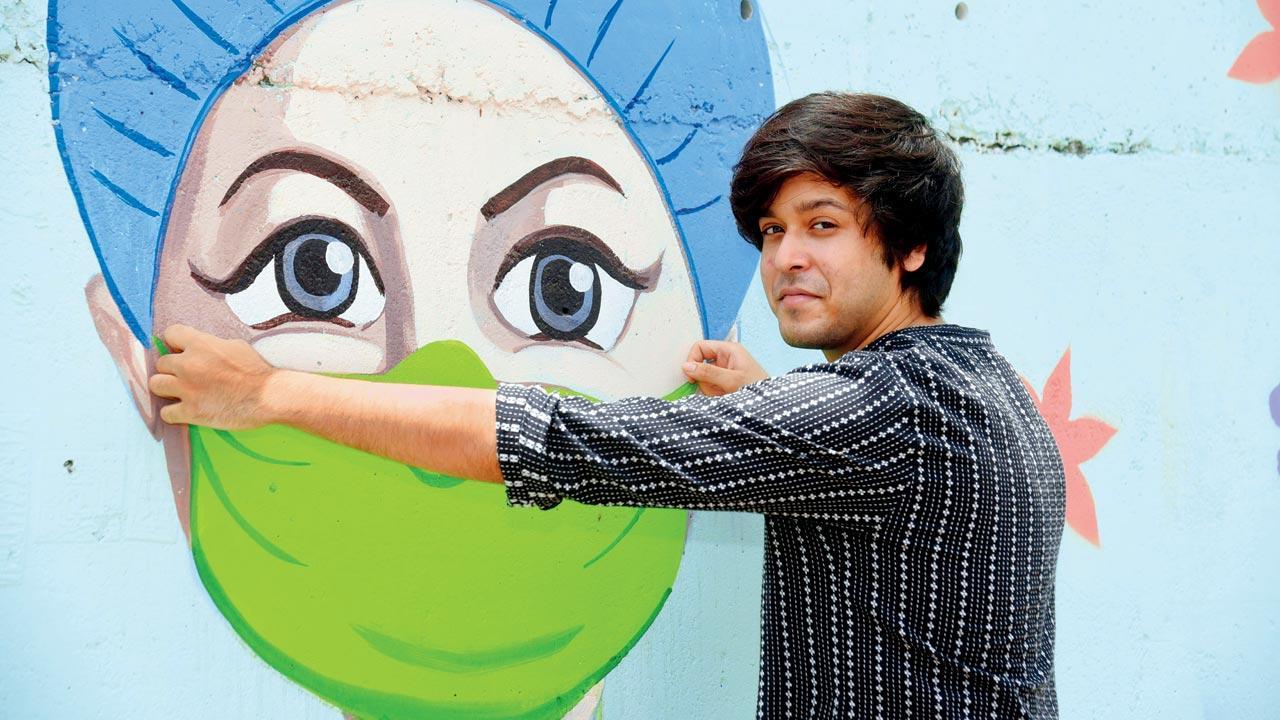
Ratnabh Mukerjei, 22, a volunteer with AAP Mumbai, has been appointed as the coordinator for the helpline, which the party launched on April 15. The helpline receives an average of 1,500 calls daily. Pic/Sameer Markande
In the last 10 days, Ratnabh Mukerjei has barely slept a wink. Attending to nearly 90 calls a day, 15 hours at a stretch, the 22-year-old has been living a machine-like existence. When we call him for this interview, he can’t seem to recall what day of the month it is. “Is it a Monday?” We say, it’s Wednesday, April 21. Then, as if remembering, he says, “It [the COVID-19 situation in the city] began going downhill from last Monday [April 12].” The Navi Mumbai resident, originally from Delhi, graduated last year during the lockdown. A student of economic policy, he signed up as volunteer with the Aam Aadmi Party (AAP) Mumbai in 2020, because he wanted to “research on the state of the city’s civic infrastructure”. As the Coronavirus infection numbers spiralled in the city early April, AAP launched a 24x7, helpline (7718812200), to assist citizens with bed allocations, oxygen supply and ambulances. Mukerjei decided to join the team helming it. While he isn’t attending to calls directly, as helpline coordinator, he has been tasked with responding to all critical cases directed to him.
Having built a network of contacts with different hospitals, jumbo centres, physicians and pharmacists, Mukerjei assists relatives and caregivers of COVID-affected patients. The good news is that the intervention has helped. The bad news is that the health infrastructure is crumbling, and on most occasions, any help that comes by is too little or late. “I have been experiencing trauma,” he says simply. “I stay in touch with the patient’s family, using all political resources at our disposal, and hear sometimes, a few days later, that they have passed on. I have learnt of five patient deaths after helping them in the last few days.”
Trending Stories
Latest Photos
Latest Videos
Latest Web Stories
ADVERTISEMENT
Mid-Day Fast
ADVERTISEMENT